India’s unexpected series defeat to Ireland has reignited debate around one key question: who is India’s next true clutch player after Hardik Pandya? I explore the team’s transition, leadership, bench strength, and why pressure performers remain central to India’s T20 future.
As I watched India’s first T20I assignment after lifting the 2026 World Cup, one question kept coming back:
Who steps up when everything is on the line?
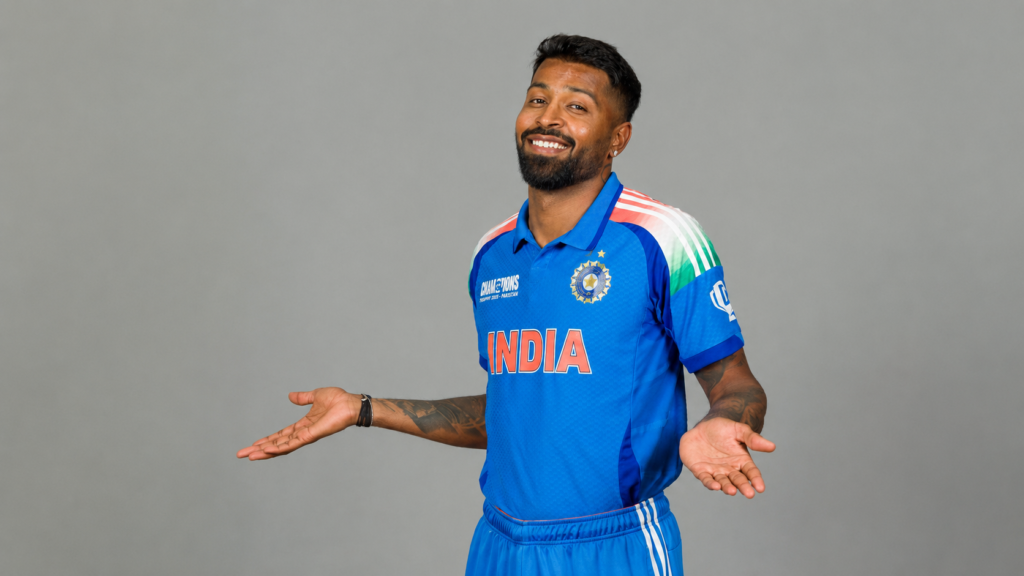
For years, Hardik Pandya became synonymous with pressure situations. Whether it was defending runs in the death overs or finishing impossible chases, he earned a reputation for remaining calm when everyone else felt the heat. Many even began calling him India’s “Clutch God.”
Now, after India’s unexpected series defeat against Ireland, I believe it is worth examining whether the current T20I setup has enough proven match winners during crunch moments. At the same time, I do not think two matches alone should become the yardstick for judging an entire squad.
What Makes Hardik Pandya the Benchmark for Clutch Performances?
Before discussing the current squad, I think it is important to understand why Hardik Pandya often becomes the reference point.
Unlike players who accumulate impressive numbers throughout a tournament, Hardik built his reputation by influencing games when the pressure reached its peak.
Some qualities that have consistently stood out include:
- Remaining composed during death overs
- Delivering crucial lower-order runs
- Bowling difficult overs in ICC tournaments
- Making bold decisions without appearing rushed
- Thriving in high-pressure situations instead of avoiding them
As the saying goes, “pressure makes diamonds.” Hardik repeatedly showed an ability to embrace those moments rather than shy away from them.
That does not mean every performance was perfect. Rather, his body of work established a pattern of delivering when India needed someone most.
From World Champions to a Historic Series Defeat
India travelled to Belfast carrying tremendous momentum after winning the T20 World Cup.
Yet the Ireland series produced an unexpected result.
The defeat:
- Ended India’s remarkable 16 consecutive T20I bilateral series victories
- Gave Ireland their first-ever international series win over India
- Sparked discussions about India’s transition following the World Cup
Naturally, reactions arrived thick and fast. However, I believe separating emotion from evidence is important before drawing sweeping conclusions.
What Does “Clutch” Actually Mean in T20 Cricket?
The word clutch is often thrown around after every close match. Nevertheless, I prefer using a narrower definition.
A clutch player is someone who performs above their usual standard when the outcome remains genuinely uncertain.
That could involve:
- Defending a modest total
- Finishing a tense chase
- Bowling the final over
- Absorbing scoreboard pressure
- Producing match-changing moments under maximum stress
Good performances and clutch performances are not always the same.
Therefore, judging India’s clutch ability from only a two-match series has its limitations. Even so, several moments from Ireland deserve attention.
What the Ireland Series Revealed
Instead of suggesting India suddenly lacks temperament, I see the Ireland series as exposing a few areas still under development.
During the closing stages of the first T20I, India’s experienced bowlers attempted to recover after expensive middle overs.
Despite captain Shreyas Iyer’s bowling changes proving costly during the 16th and 17th overs, Axar Patel and Arshdeep Singh helped restrict Ireland during the final three overs.
That sequence illustrated something important.
- Not every player reacted similarly once pressure increased.
- Some remained composed.
- Others appeared less settled.
That difference often separates dependable clutch performers from players still learning how to handle high-pressure international situations.
Captaincy Transition Added Another Layer
Another discussion following the series centred on leadership.
Replacing Suryakumar Yadav with Shreyas Iyer soon after a successful World Cup naturally invited debate.
Rather than focusing on whether the decision was right or wrong, I think the larger question is whether changing leadership during a transition period can temporarily affect clarity and decision making.
Leadership in T20 cricket often comes down to:
- Reading match situations quickly
- Managing bowling resources
- Backing instinct under pressure
- Keeping the group calm when momentum shifts
Those qualities usually develop over time rather than overnight.
Did Selection Decisions Raise Fresh Questions?
Selection also became part of the conversation.
One talking point involved the omission of Vaibhav Sooryavanshi, whose breakthrough IPL season generated enormous excitement.
Although continuity has its advantages, many observers wondered whether introducing fearless young talent could have added another dimension to India’s batting.
From my perspective, this debate is less about one player and more about balancing experience with emerging match winners during a transition phase.
Who Has Already Shown Signs of Being a Clutch Performer?
Despite the criticism, I do not think India lacks pressure performers altogether.
Several players have already produced important innings or spells in meaningful matches.
Among them are:
- Abhishek Sharma, who has continued to attack despite scoreboard pressure and has shown encouraging temperament.
- Arshdeep Singh, whose death-over bowling has repeatedly been trusted in pressure scenarios.
The bigger question, however, is not whether these players possess clutch ability.
Instead, it is whether enough players across the squad have consistently demonstrated it.
As the old cricket saying goes, “one swallow does not make a summer.”
A handful of match winners cannot carry every pressure situation throughout an entire tournament.
Is India’s Bench Strength Being Properly Tested?
The Ireland series also reopened conversations about bench strength.
World champions are generally expected to absorb changes without significant drop-offs.
However, transition periods rarely follow a straight line.
Some questions that remain open include:
- How many proven finishers does India currently have?
- Who consistently delivers under scoreboard pressure?
- Which young players are ready for overseas conditions?
- Can emerging players replace experienced match winners without disrupting balance?
These are questions that will likely answer themselves over a longer cycle rather than during one short series.
Should India Be Worried?
Personally, I would avoid sounding the alarm.
India’s recent World Cup triumph already demonstrated that this group can succeed on the biggest stage.
Nevertheless, I also think the Ireland series served as a timely reminder that maintaining success requires continuously producing new pressure performers.
Winning one tournament does not automatically guarantee the next.
After all, cricket is a marathon, not a sprint.
Final Thoughts
When I compare India’s current setup with the years when Hardik Pandya regularly delivered under immense pressure, I understand why many fans feel the difference.
Hardik established himself as India’s go-to player whenever the game entered its most difficult phase. That reputation was built gradually through repeated performances rather than a handful of memorable moments.
At this stage, I believe India still possesses several players capable of becoming dependable clutch performers. However, that group is still evolving, and consistency under pressure remains the biggest test.
The Ireland series should therefore be viewed as an early checkpoint rather than a final verdict.
With tougher assignments ahead, including the England series, India will have far better opportunities to show whether the next generation is ready to carry forward the legacy left by players like Hardik Pandya when the pressure is at its highest.

Lucky Raina is a complete cricket writer chasing corporate dreams by day and cricket stories by night. Once a promising Under 16 cricketer, life took him down a different pitch but the love for the game never left.